Tampilkan postingan dengan label livingroom. Tampilkan semua postingan

How to Decorate a Living Room Ledge

How to Decorate a Living Room Ledge

How to Decorate a Living Room Ledge

High, built-in wall ledges, common in newer homes with vaulted ceilings, large great rooms or split level entries, provide interesting architectural detail but can be perplexing to decorate. Think big when filling empty space on a high living room wall ledge. Bold colors, rich textures and varied forms with height bring a tall ledge down to size.

Create Dimension With Color

Emphasize the depth of a wide, built-in ledge by painting the wall behind it a darker shade than the surrounding walls, which will also make it appear closer. Repeating the bolder shade on a second wall such as one surrounding a bay window or containing a fireplace helps balance the room. If you want to try a different color altogether, pull an accent color from an area rug, throw pillows, curtains or upholstery to tie the color in with the rest of the room.

Use Wall Art

Create dimension with a large piece of wall art on the back wall of the ledge. Avoid heavy, framed art encased in glass, as reflected light from nearby windows or ceiling fixtures may obscure the image. Instead, opt for lightweight sculpted metal, canvas or a fabric tapestry.

Include Varied Height and Forms

To help fill visual space, place tall accents on the ledge where they are easier to see, such as:

Silk trees
Topiaries 
Lightweight folding screens
Tall candleholders

A lightweight folding screen, which can be adjusted to fit the size of the ledge, provides a textural backdrop for smaller items placed in front. Tall faux greenery such as narrow trees and topiaries bring in a natural, earthy feel with varied forms and texture. Measure the width of both the container and the foliage at the widest point to ensure the plant will fit and sits stable and secure along the ledge.

How to Decorate a Living Room Ledge

Create additional interest with large pots, jars, urns, vases or baskets in different materials, heights and shapes. Fill some with reeds, twigs or wispy dried weeds to extend their height and add texture. Choose lightweight metal or faux stone containers made from fiberglass to ensure a manageable weight.

Group Objects and Include Space

Objects grouped in odd numbers of three or five create the most visually appealing displays. Stack three lightweight trunks or vintage suitcases as one grouping. The folding screen, silk tree, twin baskets and urn with reeds could be another. Keep an asymmetrical look by overlapping items and varying the space between grouped objects. Be sure to include empty space as part of the overall design. Without a place for the eyes to rest, the ledge can easily appear over-cluttered.

Design a Room Expansion

How to Design a Room Expansion


Design a Room Expansion

It’s amazing how much extra room you can find in a home. For example, you can extend your living room by five or six feel by enclosing a front porch. Or, you can extend a bedroom by four feet into a double-car garage. Look around for wasted space or over-sized rooms that could yield space in other areas. If a room seems too small, look on all sides of it to find room to expand.

Things You'll Need

  • Measure tape
  • Yardstick
  • Claw hammer
  • Putty knife
  • Various saws
  • Lumber
  • Drywall
  • Joint compound
  • Tile
  • Particle board sub-flooring
  • Plywood
  • Electrical wiring
  • Outlets
  • Light fixtures

Decide if a room is really too small. Notice if furnishings are misplaced or too large. If not, figure out where to borrow space for a room expansion. You can take as little as 18 inches from an adjoining room to create a wall system for a TV, books, desk and computer work area. If you can’t find this room, you might want to build space onto the outside of your home. Make sketches to see what is feasible.

Figure out how to move a wall to save the expense of adding on, if possible. One way to move a wall is to go inside another room and frame a new wall. Don’t remove the old one. Just build framework inside to make it into a wall system as described in step one. Your old wall is just the front of the wall system, so to speak.

Design a Room Expansion

Knock out a wall to expand into another room, if there is space for this expansion. Make sure the wall is not a load-bearing one that is holding up roofing weight. If the wall is load-bearing, you will need to construct the wall to include a large overhead beam and side beams within the framework. This new construction will re-distribute the weight of the wall.

Framing a new wall and removing an old one is not that complicated. But, it does make a large mess. You will need to figure out how to make the floor match if you expand a room. One way to re-do the floor is to create a section of newly-installed tile work. Or, you can install carpet to make the new exposed area of floor tie in to the room that’s expanded.

Consult an expert if you decide to expand a room onto a porch. Removing an exterior wall is complicated. If your home is brick, you will need to take off brick from a wall being removed. You can sometimes use interior windows between your porch and house on a future exterior wall. Save windows as you remove a wall. Install them on the exterior of the space you will enclose on the porch. Floorspace on the concrete surface of your porch will become part of your new room's floor. Install tile or carpet in the expanded area to match the rest of the room.

Hardwood Carpet in a Living Room

Hardwood Carpet in a Living Room


Hardwood Carpet in a Living Room

A living room is the most common area in a house or apartment. For example, an individual may watch television with family, have parties or welcome guests in a living room. Thus, choosing between installing wood flooring or carpet becomes an important decision. Although choosing between the two flooring options ultimately depends on a person’s personal criteria, advantages and disadvantages of both can factor into the decision.

Advantages

Carpet provides warmth and comfort in a living room. For example, during cold months, carpet provides a natural barrier between an individual and a cold floor. Also, an individual who likes walking barefoot may want carpet installed for comfort. Carpet consists of synthetic fibers made of olefin, polyester, acrylic (art wool), recycled material or wool. Before carpet is installed, padding is placed between the floor and carpet. Wood flooring also provides warmth to a room, but instead of comfort, its warmth comes from its aesthetic or natural look. The product doesn’t need padding as carpet does. Wood flooring options include hardwood such as birch or oak and softwood flooring such as pine.

Maintenance

Carpet and wood flooring require different amounts of maintenance. Thus, deciding between carpet and wood flooring depends on the amount of maintenance work a person wants to do. For example, carpet isn’t easy to maintain. Carpet requires vacuuming because it quickly gathers allergens such as dust. An individual who has carpeted a living room may have to develop a regular maintenance schedule depending on the amount of foot traffic and soiling. Wood flooring doesn’t require as much maintenance as carpet. Wood flooring is also stain-resistant and easy-to-clean, reports House-Energy. For example, spills may permanently damage carpet, but can be easily wiped off wood. Also, tough stains such as candle wax and paint can be scraped off the wood floors.

Cost


The prices of wood flooring and carpet differ. Purchasing standard solid-strip wood floor costs approximately $8 to $12 per square foot or about $1,150 for a 12- by 12-foot room as of 2006, cites Cost Helper. The cost doesn’t include custom wood patterns, odd-shaped rooms or ripping out old flooring. Decent carpeting and padding can usually be installed for $19 to $38 a square yard, or $300 to $600 for a 12- by 12-foot room as of 2006, explains Cost Helper.


Hardwood Carpet in a Living Room

Considerations

Some stores offer free padding when they install carpet. However, an individual should ask questions about the type of padding offered. Good padding typically assists in the life span of carpet. Wood flooring can be easier to maintain as long as the floor isn’t neglected. For example, wood flooring can last a lifetime when it’s properly maintained. However, carpet may last--on average--12 years before it needs to be replaced.

The Living Room Rules for a Sofa and a Loveseat

 Living Room Rules for a Sofa and a Loveseat

The Living Room Rules for a Sofa and a Loveseat

Sofas and loveseats are typically found together in the living room of most homes. The decor of both pieces of furniture either matches or complements one another, and allows for family and friends to sit together (or apart) in numerous configurations. As a rule, living room furniture should facilitate conversation, relaxation, entertainment and harmony. Sofas and loveseats should be arranged so that individuals sitting on either can face each other easily and effortlessly.

Focal Point
When arranging a sofa and loveseat, set up either the sofa or the loveseat facing the focal point of the room, whether it's a television and entertainment center, a painting, a window, a bookcase or an archway.

Arrangement
Place the sofa and loveseat perpendicular to one another, along adjacent walls. The sofa and loveseat don't have to actually touch the walls, but they should line up parallel to the walls of the room. If one wall is shorter than the other, place the sofa on the long wall and the loveseat on the short wall.

Doorways
Keep doorways in mind when considering furniture placement. Sofas and loveseats should face toward doorways, not away from them. Guests entering a room should be welcomed by either the front or side of a sofa or loveseat, but never the back.

The Living Room Rules for a Sofa and a Loveseat

Spacing
Spacing is one of the most important points to consider when deciding how to arrange your sofa and loveseat. You must keep enough space around each piece of furniture for comfortable room traffic; household members and guests should be able to walk by easily without turning to the side or feeling squeezed in. Conversely, furniture should be close enough to facilitate comfortable conversation in quiet tones, and close enough that a person sitting on the edge of the loveseat can pass something to a person sitting on the perpendicular edge of the couch without having to get up. Also, keep heating and air conditioning in mind; if a sofa or loveseat rests along a wall with an air vent, pull the furniture a few inches away from the wall.

In Easy Reach
Keep sofas and loveseats near coffee tables or end tables. People sitting on your furniture should be able to easily reach remote controls, snacks, drinks and books.

Interior Decorating Ideas for the Living Room

Interior Decorating Ideas for the Living Room

Interior Decorating Ideas for the Living Room

Of all the rooms in your home, the living room is the most exciting to decorate. Imagination, creativity, and functionality are the keys to an inviting room, which you and your guests can enjoy. Begin with a clean slate by removing all clutter. Choose colors you like and decor you prefer. Experiment with different accessories until you find the look you like.

Clutter and Arrangement

The first step to decorating your living room is to remove all the clutter. Throw away the piles of magazines; clear off the coffee table and end tables, and remove all small collectibles. You can bring the collectibles back once you decide how the room is going to look, but for now, you want to remove any objects that distract you from designing your room. Rearrange the furniture, so you have good traffic flow and no objects interfere from that flow. You should be able to move to the couch and chairs without moving around objects. Create an area for conversation. Arrange your furniture, so you can easily talk with visiting friends or family.

Focal Point and Accessories

Choose an area of the room for your focal point. This could be a large set of windows, a couch against the wall, a fireplace, or an entertainment center. Once you decide on the focal point, choose color, accessories, and lighting to enhance the point. Colors that contrast or complement the focal point are good choices. Decorate around the focal point. If your focal point is a fireplace, add large, tall candles to the mantle. If the focal point is the couch, add colorful pillows or a throw, and try placing books piled askew on the coffee table. Place a plant near the focal point for added interest. Avoid too many small objects. Stick with odd numbers such as three or five for the mantle top, pictures on a wall, or objects on the entertainment center.

Interior Decorating Ideas for the Living Room

Lighting

Lighting adds mood, functionality, and brightens the focal point. If the focal point is a window, consider window treatments that let in the natural light. Track lighting works well if you want to spotlight a piece of art. Floor lamps are excellent choices for added decor and function. Always make sure you have plenty of lamps for reading, as well. Consider putting your lights on dimmer switches to create a mood.

Chocolate Brown and Mint Color Scheme Living Room Ideas

Chocolate Brown and Mint Color Scheme Living Room Ideas

An interesting color scheme for a home is chocolate brown with mint green. Besides making you hungry for mint chocolate chip ice cream, this color scheme is relaxing and airy as it hints at the colors of nature. If you're thinking about doing something different to your living room, give this color combination a try.

Chocolate Brown and Mint Color Scheme Living Room Ideas

Walls

Paint your walls either chocolate brown or mint green for an instant makeover. However, if the living room is tiny, you might want to shy away from painting it a dark brown. This can make the room feel even smaller. The wrong shade of green can also make you feel slightly suffocated. The solution is to alter the color slightly. You can still keep the dark brown and mint green theme going without overdoing it on your walls. Light brown or soft, pale green walls can subtly tie your chocolate and mint living room together. Alternatively, paint your walls a cream color and leave the chocolate and mint hues to the furniture and decorations in the room.

Furniture

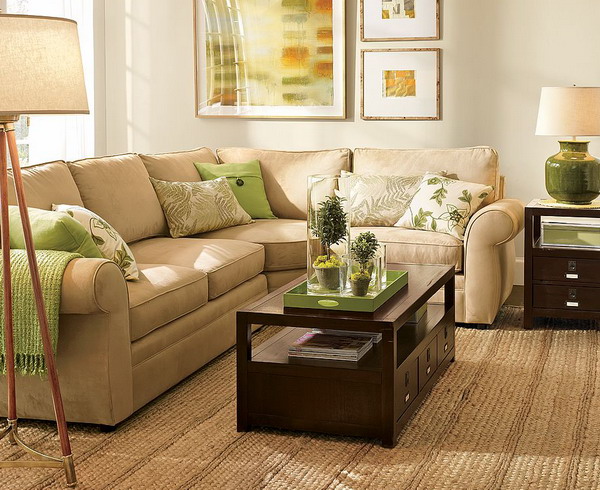
Green furniture can look a bit dated; therefore, for the color scheme it's best to stick with brown furniture. Purchase a brown love seat or a brown couch and two brown chairs. For cream or brown walls, have your window treatments in a mint color. For green walls, choose brown window treatments. Because dark brown is a heavy color, stay away from a heavy curtain materials like velvet. To prevent the room from becoming too dark, mix in some light-colored furniture like white end tables, a white ceiling fan and a light wood coffee table.

Chocolate Brown and Mint Color Scheme Living Room Ideas

Accents

Make the room pop with accessories. Purchase or make some mint green accent pillows to throw on your couch and chairs. Purchase a mint green ottoman to match the pillows as well. If you have green walls, hang chocolate brown frames around the room displaying art or your own photos. Display different green candles around the room, as well.

Small Living Room Designs With Fireplaces

Small Living Room Designs With Fireplaces

Small Living Room Designs With Fireplaces

According to a 2010 article on the “National Association of Home Builders” (NAHB) website, the recent trend toward smaller homes is expected to continue; this means smaller rooms in the home, including the living room. However, smaller doesn't necessarily have to be a disadvantage if you look at decorating and design with a different eye. Small spaces can invite people in and exude warmth and coziness.

Background

The large home trend found its peak in 2006, according to NAHB, when the average home measured almost square 3,000 feet. However, because of the economy and energy costs, homes have continued to become smaller with some people gravitating toward homes of 1,000 square feet or less. Although these homes make good economic sense, they also pose a challenge in terms of design and decor. In the new, smaller living rooms homeowners tackling decorating challenges will still rely on some of the same principles of decorating that are found in larger homes, but they will scale down the size and scope of these solutions. These solutions include taking advantage of some common living room focal points like a fireplace.

Advantages

Smaller living rooms actually present some advantages to people who like the feeling of a cozy living space. Smaller living rooms by their shear dimensions invite people to sit closer to one another as they talk, which creates a feeling of intimacy in the space. When decorated correctly, they also feel cozier, because the decor works with the small space instead of against it. The fireplace plays a key role in this setup, not only because it lends itself to the cozy feeling of the room, but also because it provides the room with a natural focal point. A properly emphasized focal point represents one of the foundations of good decorating.

Solutions

According to “Rental Decorating,” an ideal living room sits about six people comfortably, which is a doable goal in small living room decorating. There are several keys to making this space work. First and foremost, the homeowner should look at ways of making the fireplace stand out more. This not only provides a visual anchor to the room, which directs the eye. Because the room is small, there should not be an emphasis on competing focal points like a bookcase or a piano. Additionally, the way that the furniture is placed in relation to the fireplace will serve to emphasize this as well. Finally, the furniture selected for the living room should be proportionate to the size of the room and, if possible, serve double-duty to make maximum use of the space. For example, a trunk used as a coffee table provides extra storage for items like magazines, craft supplies and other hobbies.

Small Living Room Designs With Fireplaces

Space Planning

Space planning helps the homeowner think about how to use each aspect of the living room to his best advantage. Decorative elements like paint, furniture placement and use of accessories all assist in making the best use of this space. For example, a lighter colored paint on the walls along with the use of mirrors over the fireplace mantel gives the room a more open look. Furniture and accessories that embrace rich colors and patterns give the room its warmth. Finally, by going with smaller pieces like a loveseat instead of a couch and making sure that enough walk space exists between each furniture piece, the room will look inviting and the fireplace will not get lost behind too much stuff.

Colors for the Living Room That Match a Light Wood Floor

Colors for the Living Room That Match a Light Wood Floor

Colors for the Living Room That Match a Light Wood Floor

Hardwood floors are classic and attractive additions that increases the value of a home, and light-colored wood can give the home a timeless or even demure appearance. Several wall and furniture colors will complement light hardwood floors in the living room well; you can choose from these light or dark hues based on your decorative tastes and the theme of the space.

White

The clean, fresh impression that white gives a living room leaves you with a clean canvas to decorate with either bright or subdued colors. Paint the walls in your living room ivory to complement the light wood flooring, or include a white piece of furniture, like a curio cabinet or love seat, in the room to directly contrast the wood. Large, elaborate white flower arrangements, or a white, plush throw rug on the floor will be especially noticeable in a living room with light wood. Add bright colors like magenta throw pillows, or softer shades like pastel pink curtains, to complete the living room decor.

Tan or Brown

Shades of brown or tan blend well with light wood flooring, and add a sense of comfort and reliability to the living room when painted on the walls. Brown throw blankets on the armchairs or love seats are an appropriate addition to the space, along with large, leather throw pillows in darker shades of brown like chocolate or nutmeg for the living room floor; pillows made of suede, velvet, and leather will also add texture to the room and provide more of a pleasant visual contrast against the wooden flooring.

Colors for the Living Room That Match a Light Wood Floor

Pastels

Pastel colors like pistachio green, creamy shades of yellow, and soft pink are gentle and calming additions to a living room with lightly colored hardwood floors. Light pink curtains, floral centerpieces of potpourri featuring shades of lavender or yellow, or a pastel green area rug can even give the living a Victorian style feel, particularly when you add elaborate photos of flowers housed in silver or gold frames. Patterned pillows for the couch and armchairs that feature stripes or roses are suitable for a living room with a romantic feel.

Shades of Blue

Blue, the shade that represents the sky and water, is a "cool" color that adds an air of tranquility to the living room. Sheer blue curtains make the room airy and light, and a soft blue couch with cobalt and navy blue pillows can serve as the focal piece in the room. Blue furniture, like a grandfather clock accented with blue, or a set of pastel blue end tables on either side of the sofa, are visually appealing against a light wooden floor; lamps with dark blue shades on top of the end tables can serve as the finishing touch in a blue-themed living room.

Brown and Teal Ideas for a Living Room Design

Brown and Teal Ideas for a Living Room Design


Brown and Teal Ideas for a Living Room Design

The color brown pairs beautifully with green and blue, which combine to make the color teal. An earthy color palette of brown and teal brings balance to a living room with both warm and cool tones. Choose the big-ticket items in the living room first when putting together a brown and teal color scheme. Upholstered furniture and large area rugs can be pricey, and it’s much easier to coordinate paint colors with the room’s furnishings than vice versa.

Furniture Ideas

Chocolate brown upholstery on sofas and chairs looks rich and inviting and makes a wonderful complement to the deep, reddish-brown tones of wood furniture with a cherry or mahogany finish. Teal accent pillows with a lustrous sheen bring in a bold splash of color. Repeat the accent color with a smaller upholstered chair in teal, draped with a caramel-colored throw.

For a modern, eclectic or bohemian feel, a teal sofa sprinkled with sari pillows in pink, orange and red infuses the living room with vibrant colors. Layer in various shades of brown with a pair of shiny copper Moroccan poufs and walnut-toned end tables.

Chairs upholstered in teal leather make a striking combination with a light brown leather or beige sofa and brown wood coffee table. Mix in other upholstered pieces in neutral colors of cream, white, black or gray to depart from an overly matched look.

Window Treatments

Enhance an eclectic or contemporary living room with fabric window shades featuring an ikat pattern in teal. Roman shades with a teal Moroccan trellis pattern offer a stylish alternative.

Teal drapes contrast beautifully with dark wood furnishings and upholstered pieces in brown leather or chocolate brown microfiber, suede or velvet. For a lighter, airier feel in a casual living room with upholstery in beige, cream or camel and lighter toned wood, go with a teal pattern on cotton curtains or sheer panels in teal.

Brown and Teal Ideas for a Living Room Design

Dark brown plantation shutters offer an upscale look in a traditional living room or a design with a tropical theme. Woven wood or matchstick blinds lend a casual feel with rustic organic texture. Beige or cream drapes or curtain panels provide a soft, neutral backdrop for furniture and walls in practically any color.

Accents and Accessories

Glass bottles with a teal green tinge make striking vases for twisted branches or displayed as is on a mantel, bookcase or shelf. Teal art glass vases or sculptures brighten a living room with brilliant blue-green color.

Ceramic lamp bases in teal add snazzy style to a modern brown console table or cabinet. An artfully crafted teal pendant light or translucent teal shade covering a chandelier brings in an unexpected pop of color. A chevron or geometric fretwork print in teal on drum-style lampshades looks fresh and up to date.

Teal and brown pair wonderfully in an area rug. Use a floral, circular or block-patterned rug in both colors to emphasize the teal and brown palette. If more brown is needed to balance the room, sisal or jute rugs provide a good neutral base with earthy texture.

Wall Color

Once your furnishings and accessories are in place, focus on wall colors that complement the surroundings. Determine whether the dominant color in the room is teal or brown -- important even when choosing white for walls. If you’ve chosen a teal sectional and teal ikat shades, for example, go with a cool white with blue or gray undertones. In a room with dark wood furniture and chocolate brown upholstery, on the other hand, a warm white, cream or beige wall color complements those colors and keeps the room from feeling too dark.

A burnt orange or rusty red accent wall enhances the blue-green tones of teal accessories, as orange and red reside opposite blue and green on the color wheel. For a cozy feel with teal or beige upholstery, try chocolate brown on walls. If the living room has only a few teal accents such as pillows, bring in more of the color with a teal accent wall. Make teal the primary wall color in a living room furnished in brown, tan and beige.

An alternative neutral wall color option for a teal and brown living room is the color gray. Gray has undertones of blue, green, purple or brown, which all coordinate with teal and brown.

How to Decorate a Small Attached Living And Dining Room

How to Decorate a Small Attached Living And Dining Room

How to Decorate a Small Attached Living And Dining Room

Decorating a small attached living and dining area can be a headache, and creating distinctly separate rooms with minimal space can be a design challenge. But a tiny living space doesn’t have to feel like a shoebox; with a little guidance and preparation, your home can go from cluttered and cramped to wonderfully cozy. And the best part? Your renovation doesn’t have to cost a fortune.

Things You'll Need

Interior house paint
Roller
Brushes

Empty out the living and dining rooms, moving the furniture well out of the way for now. You need to be able to plan out your space without having to climb over the sofa to get from one end to the other.

Select an interior latex paint in a light, neutral color, and paint both rooms in the same hue. Choose a satin finish, which will be less reflective and add depth to your walls. Light colors will make the room feel more open and bright, and painting both rooms in the same color will keep the areas from seeming boxy and enclosed.

Use furniture to define the spaces, and treat them as two distinct rooms. Orient your dinette set or dining table in the center of the dining room. Arrange the living room furniture around a focal point, such as a TV or fireplace. Splitting the rooms in this manner visually enlarges the space by creating purposes for each room. The unified paint color, meanwhile, prevents the eye from becoming distracted.

How to Decorate a Small Attached Living And Dining Room

Add bright, airy accent elements. Small spaces are often shrunken by bold decorating styles, so understatement is the key with your decor choices. Look for lamps with delicate, slender bases and light colored shades; hang pictures with narrower frames, and try to avoid cluttering your wall space. Select draperies and curtains in lightweight, sheer fabrics.

Get organized. Perhaps the best way to maximize the appearance of space in a small, attached living and dining space is to do a little spring cleaning. Get rid of furniture that isn't necessary to the space, and minimize decorative elements. Clutter drastically reduces the impression of space, so making sure that every object has a designated place can do wonders for opening up your home.